

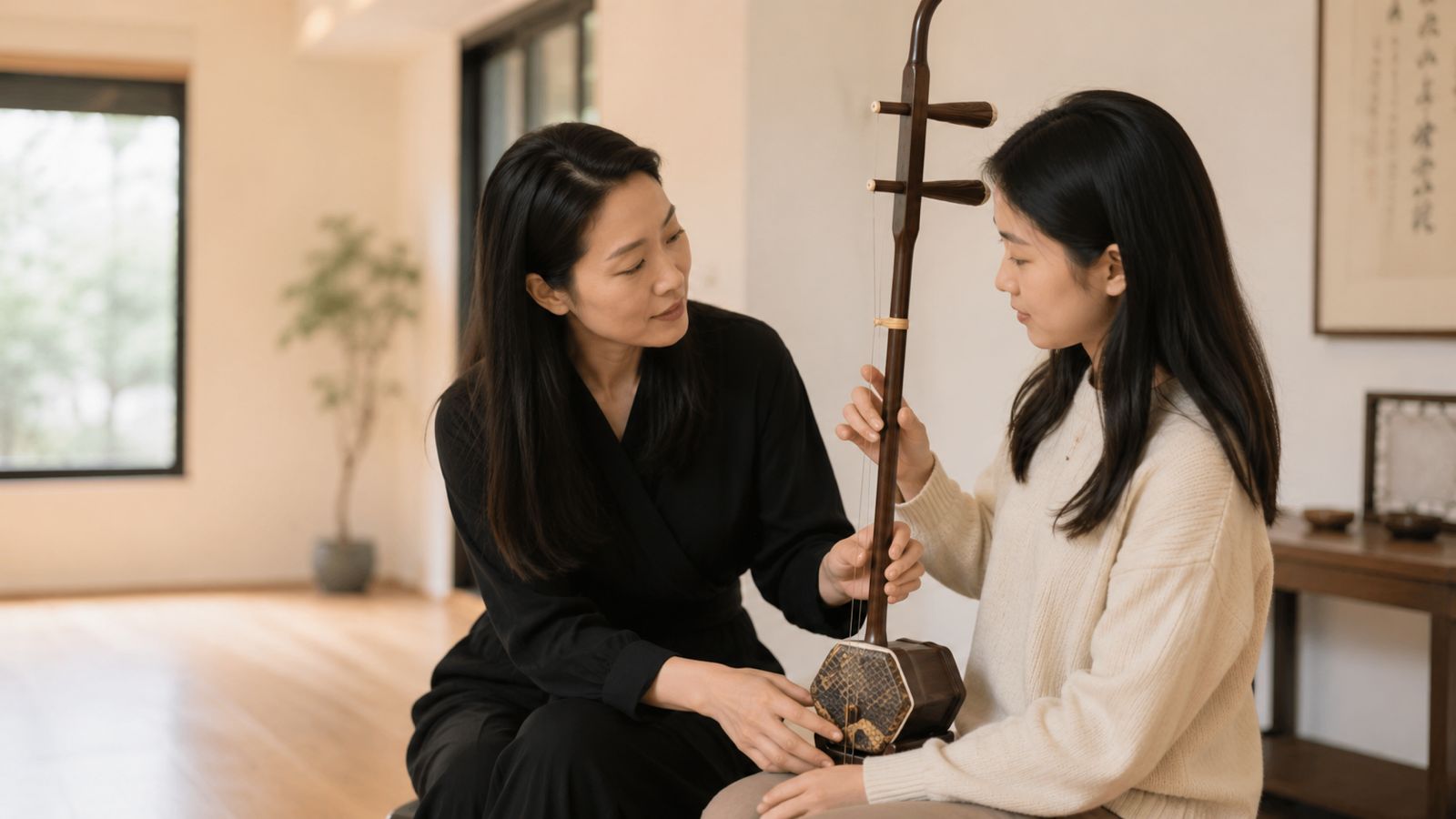
How to Choose the Right Erhu - Without Overpaying or Getting It Wrong
Whether you're buying for yourself or your child, this guide will help you understand what actually matters - so you can decide with confidence, not guesswork.
Choosing an Erhu isn't complicated - but it's easy to get wrong if you don't know what to look for. The right instrument will make learning easier and more enjoyable. The wrong one can make even simple notes feel like a struggle.
This guide covers everything you need to know, in plain language. Let's keep it simple.
I still remember my first Erhu when I started learning at 15. It was a simple, mediocre model - because like many families, we weren't sure how long I'd stick with it. It played decently enough, but it felt sluggish. I had to work really hard with the bow to get a clean note, especially on the high registers where it always sounded scratchy.
I thought it was my technique. I tried adding more rosin, I practiced harder - but nothing solved it. Then one day, I picked up a friend's better Erhu. Immediately, everything felt different. The bow grabbed the strings with ease, the tone was clearer, the high registers sounded clean. That was the moment I understood: not all Erhus are built equal. And choosing the right one matters more than most people realise.
The Instrument Affects Your Progress More Than You Think
The Erhu is already a challenging instrument to learn. Unlike a piano or guitar, there are no frets or keys to guide you - your intonation and tone rely almost entirely on your own skill and ear. Starting on a poor instrument adds another layer of difficulty that simply shouldn't be there.
A well-chosen Erhu gives you two things from the start:
- A pleasant sound when you play. This keeps you motivated. If every practice session sounds scratchy and difficult, it's hard to stay encouraged.
- Honest feedback on your technique. When you hit a clean note, you know it's your skill improving - not luck, and not the instrument fighting you.
This doesn't mean you need to spend a lot. It just means the instrument should be suited to where you are right now.
The goal isn't the most expensive Erhu. The goal is the right one - for your budget, your level, and what you want to do with it.
Five Things That Actually Matter When Choosing an Erhu
When we help customers choose an Erhu, we look at the same five things every time.
1. Playability - How Easily It Responds
Playability is about how easily the Erhu produces a clean, clear tone when you bow it. On a responsive Erhu, you bow gently and the sound comes out immediately. On an unresponsive one, you have to work harder, and you still end up with a scratchy result.
For beginners, this matters most. You're still developing your bow technique, so you need an Erhu that works with you rather than against you. Think of it like a bicycle: a well-maintained one responds the moment you pedal. A rusty one fights you at every turn.
For more advanced players, playability becomes about control - the ability to play softly or powerfully, to change tone colour, to execute fast passages clearly.

2. Tone Quality - The Sound You'll Live With
Tone is the personality of your Erhu. Even complete beginners can usually feel when one Erhu sounds nicer than another - that instinct is worth trusting.
There are a few qualities to listen for:
- Sweetness: A gentle, lyrical quality - soft and smooth, not harsh.
- Warmth: A rounded, mellow sound, as if the tone has some natural depth to it.
- Clarity: Are the notes distinct and clean, especially on the higher strings? Or do they sound muddy and unclear?
- Balance: Does the Erhu sound consistent across low and high notes, or does it drop off in the upper register?
When you come in, our staff will do a sound test so you can hear these differences directly - not just read about them.
3. Materials - Wood and Snakeskin
The two main materials that define an Erhu's character are the wood and the snakeskin.
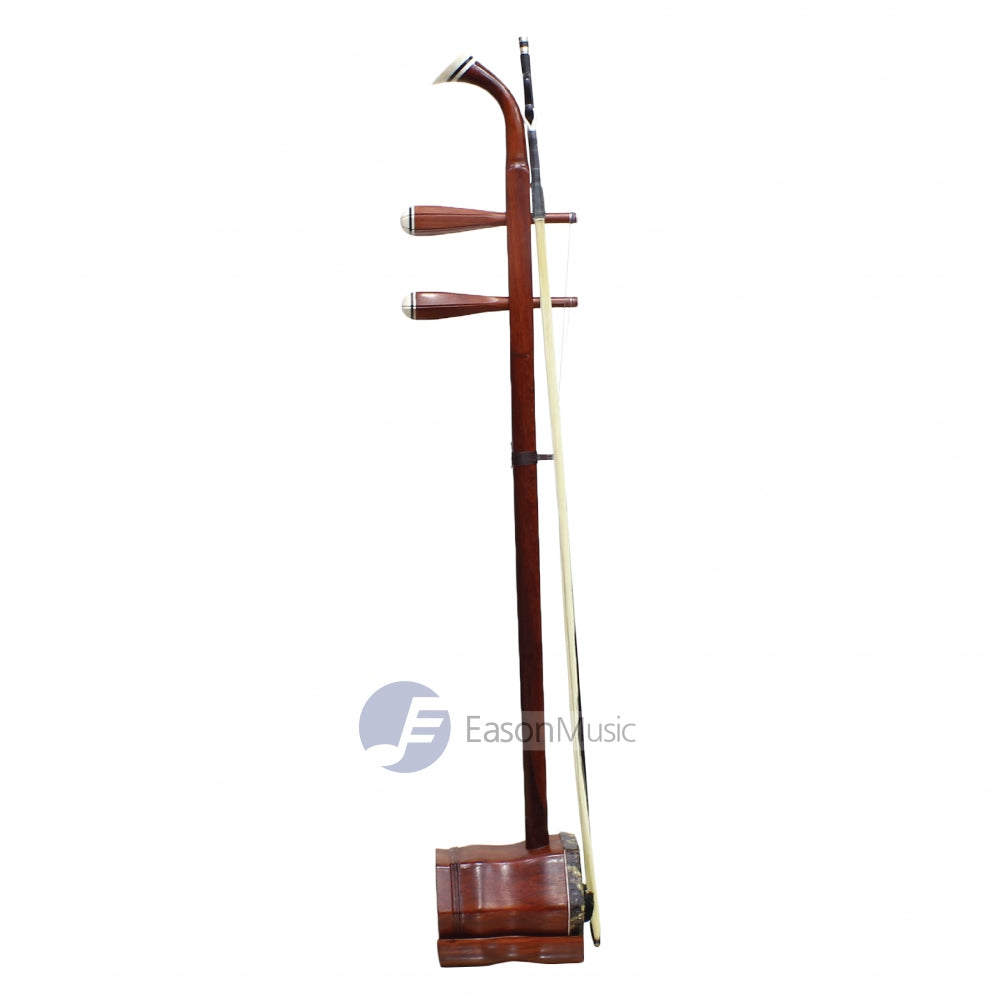
Wood: Different woods produce different tones. Rosewood tends to be sweet and articulate - a good fit for most learners. Violet Sandalwood is more articulate and clear, popular with more advanced players. Indian Small Leaf Sandalwood is rarer and more expensive, valued for its richness. There's no single "best" wood - it depends on the sound you're drawn to.
Snakeskin: The snakeskin acts like a speaker cone. A tighter skin takes longer to "open up" but lasts longer and can develop a richer tone over time with regular playing. A looser skin is easier to play right away but may become muddier after several years. Both are valid choices depending on your situation.
All legal Erhus today use certified farm-raised python skin - this has been required by law in China since 2005, as part of wildlife protection regulations. If a seller claims their Erhu has "wild snakeskin," it is either an old antique, mislabeled, or illegally traded. When buying a new Erhu, you don't need to worry about this - what matters is the quality of the skin's thickness and setup, not its origin.
4. Price - What You Actually Get at Each Level
Price matters, but it's not the whole picture. Here's a simple way to think about the three levels:
There is always an Erhu that works within your budget - you don't need to overspend to get something decent. If your finances are tight, we'll help you find the best option at your price point. If you have room for something better, we'll guide you there honestly. Either way, the goal is the right fit - not the biggest sale.
5. Setup and After-Sales Support
Two identical Erhus can sound completely different depending on how they're set up - string height, bridge position, bow tension all affect playability. Buying from a shop that actually plays, sets up, and stands behind the instruments they sell makes a real difference.
Every Erhu we sell leaves the shop properly adjusted, and we offer a one-year warranty on manufacturing defects. If something feels off after you've taken it home, come back and we'll look at it.
What to Focus On Depending on Where You Are
For Beginners
Focus on playability first. If the Erhu responds easily and gives you a clean sound, you'll be more motivated to practice. Budget-wise, a mid-range model is usually a better long-term choice than the cheapest option - it won't hold you back as quickly.
One thing to avoid: judging an Erhu by how it looks. A beautiful finish doesn't mean it sounds good. Always listen to it played, or ask our staff to demonstrate.
For Intermediate Players
Look for a clear improvement in tone and articulation over your current instrument. If you're playing in a school orchestra or preparing for graded exams, clarity matters - your notes need to project and be distinct, not muddy in an ensemble setting.
Fast passages are a good test: on a well-articulated Erhu, quick notes stay clear and separate. On a muddier one, they blur together.
For Advanced Players and Soloists
Test with your own repertoire. Bring a piece you know well - ideally something that has both quiet, delicate passages and loud, powerful moments. Test the dynamic range, the high register, and how the Erhu responds to subtle bow changes. Makers worth looking at: Hu Han Rou, Yu Kai Ming, Xu Chun Feng.
For Parents Buying for Children
Erhus don't come in children's sizes - the instrument is standard, and we simply adjust the qianjin (the string stop) to suit smaller hands. This means your child won't outgrow the instrument, so it's worth investing in something decent from the start.
A better-sounding Erhu also keeps children more motivated. When every practice session sounds harsh and difficult, it's harder to stay interested.
What to Listen For When You Try One
You don't need to be an experienced player to test an Erhu. Here are the things we pay attention to when helping customers choose.
- Open string response. Even without pressing any fingers, bow the inner and outer strings. Does the sound come out easily and cleanly, or does it require a lot of pressure?
- High register clarity. The upper notes on the inner string are where many Erhus struggle. They should sound clean and clear - not scratchy or forced.
- Inner and outer string balance. Both strings should feel roughly similar in resistance and tone quality. If one is noticeably harder to play, the setup may be off.
- Overall volume. Does it project naturally, or does it sound small and contained even when bowed firmly?
If you can't play yet, that's completely fine - our staff will play it for you. The important thing is that you listen and trust what you hear.
Three Questions Worth Asking First
Before choosing an Erhu, it helps to be clear on three things. These will point you to the right instrument much faster than any features list.
These three answers narrow it down quickly. Most people don't need to deliberate for long once they're clear on these - there's usually one or two obvious options that fit well.
If you're still unsure, come in. We'll ask you these questions, play a few options for you, and give you an honest recommendation - no pressure, no upselling.
FAQs About Buying an Erhu
The best beginner Erhu is one that's responsive - meaning it produces a clean tone without requiring too much force. Our Beginner Erhu Collection is set up so new players can get a clean sound quickly and stay motivated to practice.
A decent beginner Erhu starts from around SGD $200–$400. Intermediate models are $500–$1,200, and professional instruments start from $1,300. You don't need to spend at the top of your budget - the right fit matters more than the highest price.
It depends on the sound you prefer. Rosewood is sweet and articulate - good for most learners. Violet Sandalwood is richer and more articulate, popular with advanced players. Indian Small Leaf Sandalwood is rare and highly valued for its tone. There's no single right answer - come in and listen to the difference.
No - Erhus are standard size. We adjust the qianjin (the string stop) to suit smaller hands. Your child won't outgrow the instrument, so it's worth starting with something that sounds good.
With proper care, a well-made Erhu can last for decades. The snakeskin may loosen over time (usually after many years), but higher-quality skins on regularly played instruments can last a very long time before needing replacement.
Yes - for online purchases, you can request a video demo of the specific instrument before deciding. For higher-end models, we also offer live Zoom demos. We want you to hear what you're buying, not just see a photo of it.
Not Sure Where to Start?
Come into the shop. We'll ask a few simple questions, play a few options for you, and help you find the right fit - honest advice, no pressure.
Browse Our Erhu CollectionHave questions first? Drop us a message and we'll point you in the right direction.


