

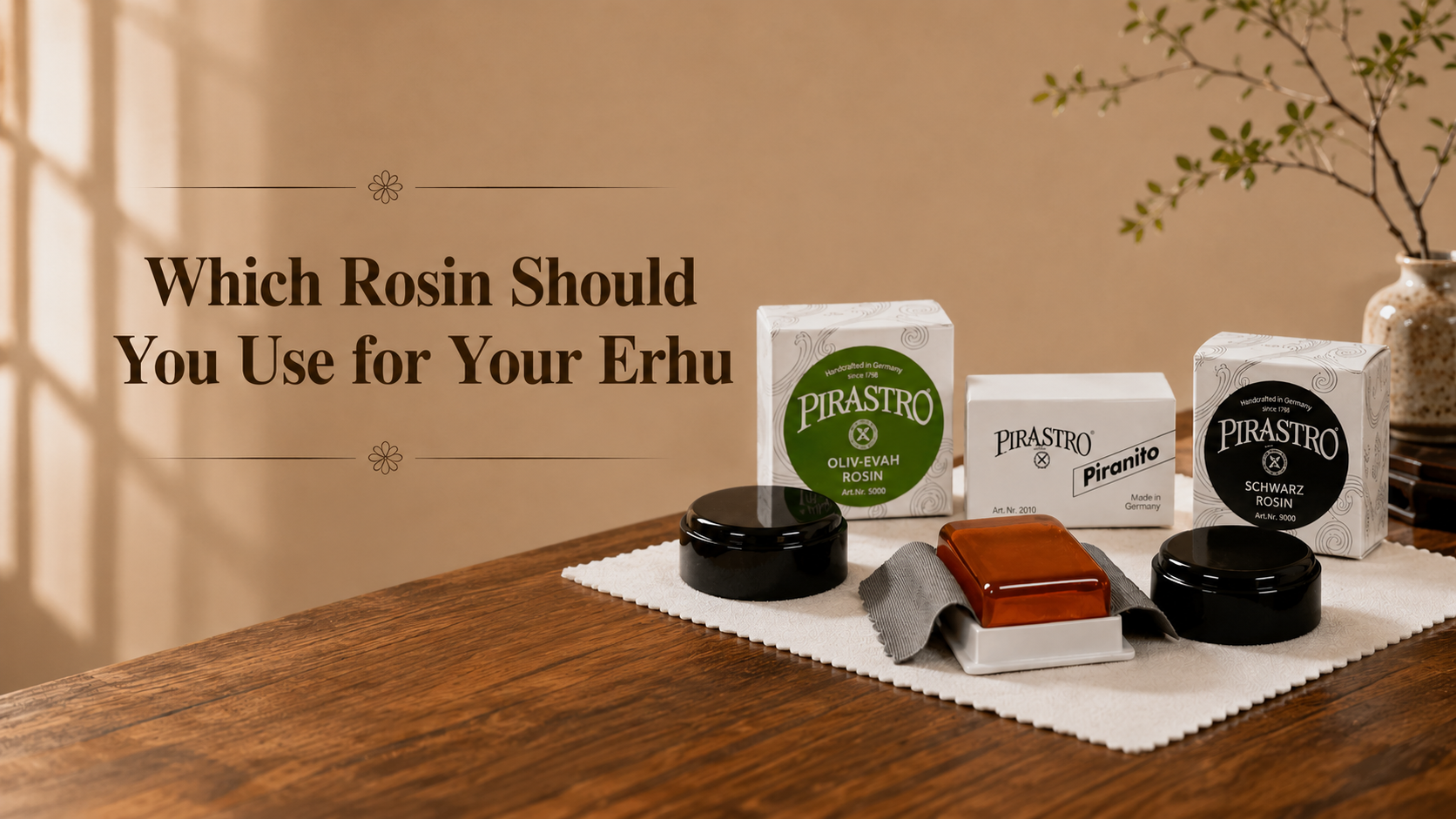
Which Rosin Should You Use for Your Erhu - And Does It Actually Matter?
Rosin is one of the most overlooked accessories in Erhu playing. Most beginners use whatever comes with the bow without thinking about it. But the right rosin can make a noticeable difference to your tone and how easily the bow grips the strings.
When it comes to the Erhu, most players spend a lot of time thinking about the instrument, the strings, and the bow. Rosin rarely gets much attention - but it probably should. It's a small thing that affects how your bow grips the strings, which affects the tone you produce, which affects how your playing feels and sounds every single time you practice.
We decided to find out which rosin actually performs best for the Erhu - so we ran a blind test.
Why Rosin Matters - The Simple Version
The bow hair on your Erhu bow is smooth on its own. Without rosin, it would slide across the strings without catching them - you'd get almost no sound at all. Rosin coats the bow hair with a slightly sticky, textured layer that grips the string as you draw the bow across it. That grip is what causes the string to vibrate and produce a tone.
Different rosins grip differently. Some grip firmly - producing a stronger, more powerful sound but sometimes with more roughness. Others grip lightly - producing a smoother, more refined tone but requiring more bow pressure to bring out volume. Neither is objectively better. It depends on your playing style, your current level, and what your Erhu already sounds like.
For most players, rosining the bow lightly before each practice session is enough. A few strokes across the bow hair is sufficient - you don't need to apply heavily. Over-rosining leads to excess powder on the strings and soundboard, which can dull the tone and requires more frequent cleaning.
How We Compared Them
We tested seven rosins: three from Pirastro (a German maker known for bowed string instrument accessories) and four Leto Rosins. All were tested on identical Hu Han Rou Erhus with fresh bows to keep conditions as consistent as possible.
The test was blind - meaning I played each rosin without knowing which one I was using, and rated them purely on tone and feel. Here are the results.
One of our instructors preferred the Leto Rosin over the Pirastro options, finding the Pirastro range "too sticky" for their playing style. This is a good reminder that rosin is personal - there's no single right answer, and your preferences may differ from ours. Use this guide as a starting point, not a final verdict.
Ranking - From Our Blind Test
Here's how the rosins ranked, with our honest notes on each.

This came out on top in the blind test. It has a firm, confident grip on the bow hair - which translates to a stronger, richer tone with good projection. The sound has body and depth to it. If you want more presence and richness from your Erhu, this is worth trying.
Best for: players who want a fuller, more powerful sound.
View product →
A well-balanced option - slightly less grip than the Oliv, which gives it a smoother, more controlled feel. The tone is clean and even, without the roughness that heavier rosins can sometimes produce. A good middle-ground choice for most players.
Best for: players who want a balance of control and tone quality.
View product →
The lightest-gripping of the three Pirastro rosins. It produces a smoother, softer tone - good for players who prefer finesse over power, or those who find heavier rosins make their sound too rough or scratchy.
Best for: players who prefer a lighter, more refined touch.
View product →The four Leto Rosins felt fairly similar to each other overall - decent grip, decent tone, and a more affordable price point than the Pirastro range. They're a reasonable starting point if you're new to rosin and not ready to invest in the Pirastro options yet.
The one key thing to note: one of our instructors actually preferred these over the Pirastro range, finding them less sticky and more suited to their playing style. So if the Pirastro options feel too grippy for you, the Leto range is worth trying.
New to Rosining Your Bow?
If you've never rosined a bow before, it's straightforward. Hold the rosin block steady and draw the bow hair across it in long, smooth strokes - moving in one direction. A few strokes before each practice session is usually enough. You'll know you've applied enough when the bow starts to grip the strings more firmly.
We've put together a short video tutorial if you'd like to see it done. It takes about two minutes and covers everything you need to know.
See exactly how to rosin an Erhu bow - step by step. Watch on YouTube →
Which One Should You Get?
If you want our honest recommendation based on the blind test: start with the Pirastro Schwarz. It's balanced, consistent, and works well for most playing styles and levels. If you want more richness and power, try the Pirastro Oliv. If you prefer something lighter and smoother, the Piranito is worth a try.
If budget is a consideration, the Leto Rosins are a decent starting point - and as our instructor's preference shows, some players genuinely prefer them over the premium options. Rosin is personal, and the best one is whichever works for your hands, your bow, and your Erhu.
The only way to really know is to try a few. Come in and ask us - we're happy to talk you through it.
Browse Our Rosin Collection
All the rosins mentioned in this guide are available in our store. Not sure which one to start with? Come in and we'll help you pick the right one for your playing style.
Browse Erhu RosinsHave questions? Drop us a message and we'll point you in the right direction.


