

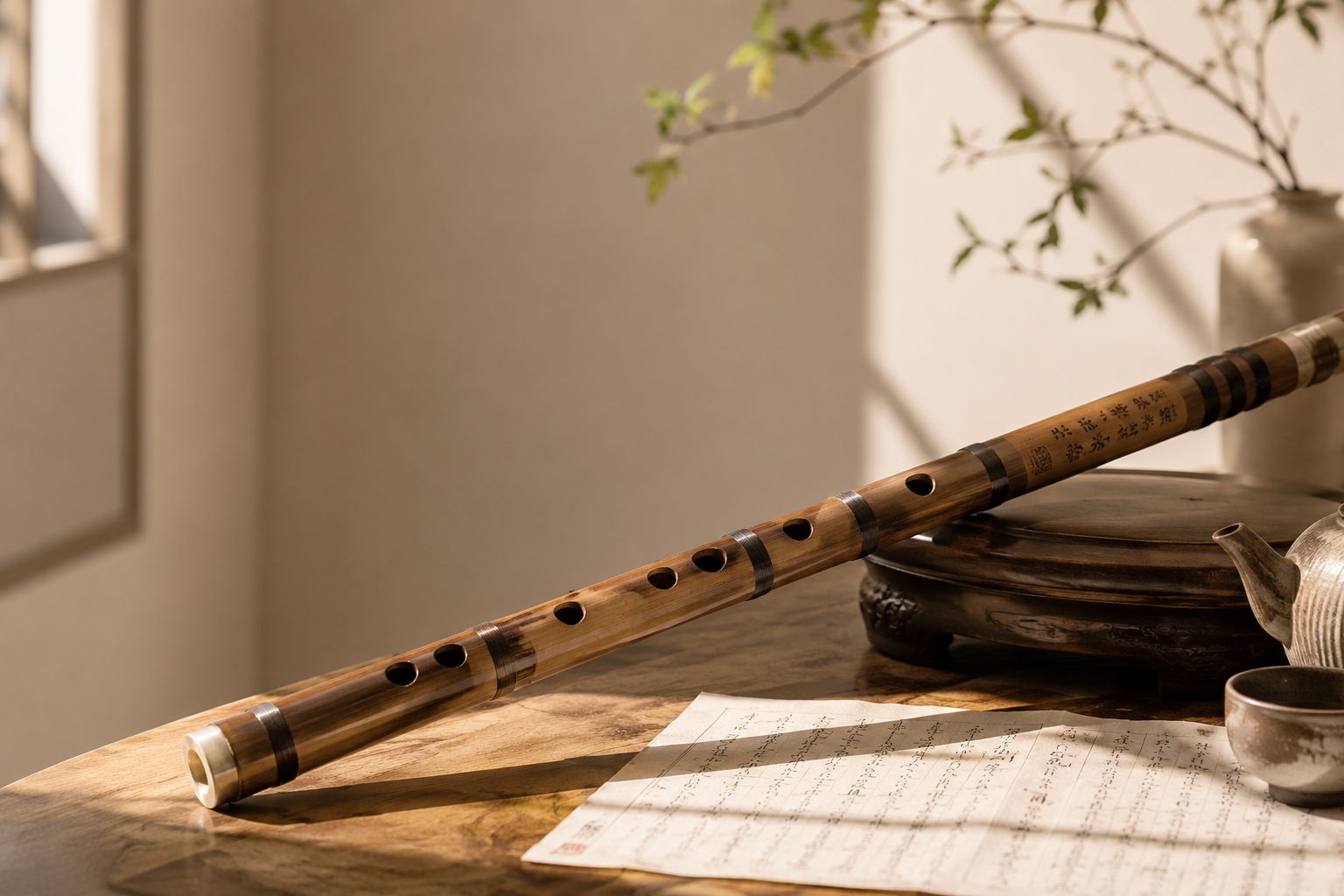
How to Tell a Good Dizi from a Cheap Souvenir
Walk through any street market in Asia and you'll see rows of beautiful bamboo flutes tied with red silk. They all look the same. But once you play them, the difference is clear.
Some are real instruments. Some are decorative props. If you're buying a Dizi for the first time — or for your child — this guide will help you know what to look for. You don't need to be an expert. You just need to know the right things to check.
Let's keep it simple.
Start with the D Key — Here's Why
There are many sizes of Dizi, each in a different musical key — from small and high-pitched to long and low. For most beginners, we recommend starting with a D Key Dizi.
Here's why it works well:
- Comfortable to hold. The size fits most hands — your fingers don't have to stretch too far, and the breath pressure needed is manageable.
- Stays useful as you improve. Most beginner song books and school pieces are written for the D or G Dizi, so you won't outgrow it quickly.
- Lets you focus on learning. A forgiving key means you can concentrate on your technique instead of fighting the instrument.
For most beginners, D Key is the standard starting point. However, if the child is quite young or has especially small hands, a G Key Dizi may be more comfortable — it's shorter and easier to reach. Not sure which fits? Come in and we'll help you check.
Why Bamboo Age Actually Matters
A good Dizi isn't just about price. It's mainly about the bamboo — how it was grown, how long it dried, and how carefully it was made.
Aged Bamboo — The Simple Explanation
A proper Dizi is made from bamboo that has been naturally air-dried for several years before it's made into an instrument. The makers we work with — such as Xie Bing — typically use bamboo that has been aged for 4 to 5 years. This isn't marketing language — here's what actually happens during that time.
Fresh bamboo is still full of moisture and natural sugars. A flute made from it will sound muffled, and the bamboo is more likely to crack. After years of drying, the fibers settle and harden — a bit like how good timber needs to be properly seasoned before being used in furniture. The result is a more stable, resonant material.
In Singapore's climate — where humidity shifts daily and air-conditioning is everywhere — aged bamboo handles the temperature changes much better than fresh bamboo.
- Notes respond more clearly. The bamboo vibrates freely instead of dampening the sound.
- High notes become easier. Low notes feel deeper and more open.
- More resistant to cracking. Aged bamboo absorbs moisture changes at a fraction of the rate that fresh bamboo does — important in our climate.
How We Test Sound In-Store
When you come in to buy a Dizi, our Dizi instructor or staff will do a proper sound test for you. This means playing the instrument so you can actually hear the difference between a good Dizi and a lesser one — not just read about it. It's one of the most useful things we can do to help you decide, and we're happy to do it as part of the process.
Two Things That Matter Most for Beginners in Singapore
Wall Thickness — What to Look For
Look at the cross-section at the end of the bamboo tube. The right wall thickness varies depending on the key of the Dizi — a longer, lower-pitched Dizi naturally has different proportions than a shorter one. What matters more than a specific number is that the thickness looks even throughout. Uneven walls disrupt the airflow inside and make the notes inconsistent.
Thinner-walled flutes can sound bright, but in Singapore's climate they are more likely to crack when moving between air-conditioned rooms and the outdoors. Slightly thicker walls produce a more stable tone and hold up better to daily use.
Our humidity shifts constantly. Thin bamboo expands and contracts quickly with temperature changes, which causes stress cracks over time. A Dizi with good, even wall thickness handles these swings much better.
The White Copper Joint — What Beginners Should Know
Most beginner Dizis come with a single-section White Copper (Cupronickel) joint — a metal sleeve near the middle of the flute that you can slide in or out to adjust the pitch. This is the most common setup and works well for beginners.
Why does this matter? Temperature affects pitch. In a warm room your Dizi plays slightly sharp; in a cold, air-conditioned hall it plays slightly flat. A tunable joint lets you match the piano or other instruments with a simple adjustment. Without it, you'd have to correct the pitch with your breath alone — an advanced skill that takes years to develop.
- Why White Copper (Cupronickel) specifically? In Singapore's humidity, brass joints develop green rust fairly quickly and can start to leak air. White Copper resists corrosion much better and lasts longer under daily use.
- What about jointless Dizis? Many premium Dizis are actually made without a joint at all — the bamboo is so well-crafted that it stays in tune consistently. These are generally for more experienced players who already have good breath control.
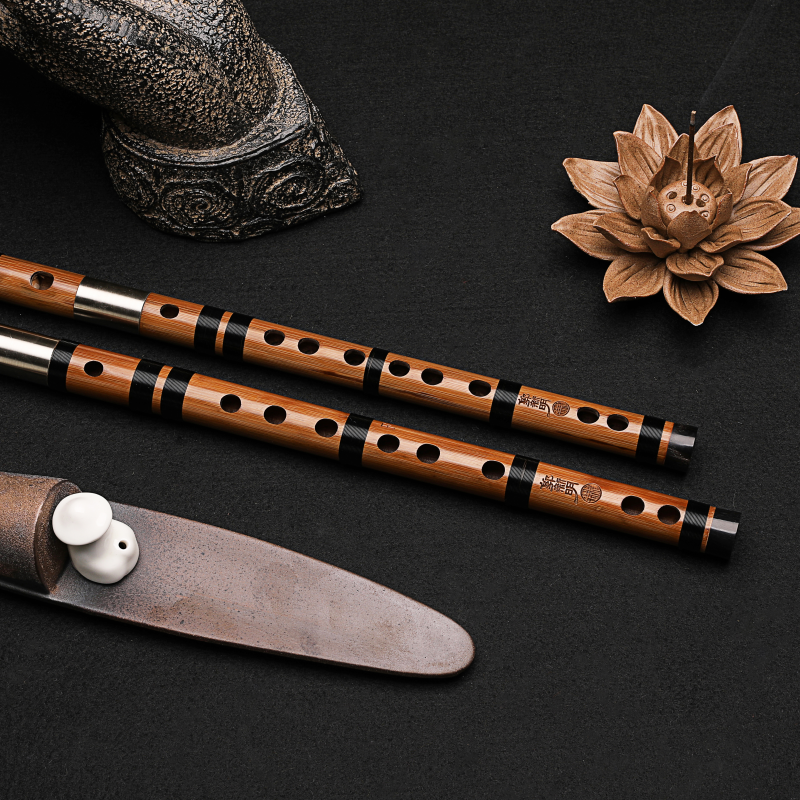
High-End Model Dizi (Double Slots) by Guo Xinming — a good example of a well-made Dizi with a White Copper joint, made from Hangzhou Ku Zhu bamboo.
Souvenir vs. Real Instrument — What to Look For
Here are the most common differences between a playable Dizi and a decorative one. You don't need a trained eye — just know what to check.
| Feature | Playable Dizi | Decorative Souvenir |
|---|---|---|
| Bamboo Colour | Warm amber or honey tone — sign of proper aging | Pale or green-tinted — likely not properly aged |
| Surface Finish | Natural or lightly lacquered — you can see the bamboo grain clearly | Thick, dark, opaque paint — may be hiding cracks or poor quality |
| Engraving | Smooth, clean strokes with consistent depth | Burnt, charred edges — sign of low-quality laser engraving |
| Maker's Mark | Clear, consistent stamp from a known craftsman (e.g., Xie Bing, Dong Xue Hua, Bao Guo Liang, Guo Xin Ming) | Generic or messy marks with no traceable maker |
| Joint Material | White Copper (Cupronickel) — corrosion resistant, airtight | Brass — oxidizes in Singapore's humidity, prone to leaking |
A Note on Paint
If a Dizi is coated with thick, dark, opaque paint — especially dark red or black — it's worth asking why. A well-made Dizi usually has a natural or lightly lacquered finish so you can see the bamboo clearly. Paint isn't always a problem, but it is sometimes used to cover cracks or low-quality grain. When in doubt, hold it up to the light and look along the length of the tube.
The "Yellow Eel Grain" Pattern
You may come across Dizis advertised as having "Yellow Eel Grain" bamboo — a natural, spiral-like pattern that appears on high-density aged bamboo. When it's real, it's a good sign. Real Eel Grain grows organically from the bamboo's structure and looks consistent and flowing. If the spots look messy, disconnected, or painted on, it's just a decorative claim on a regular flute.
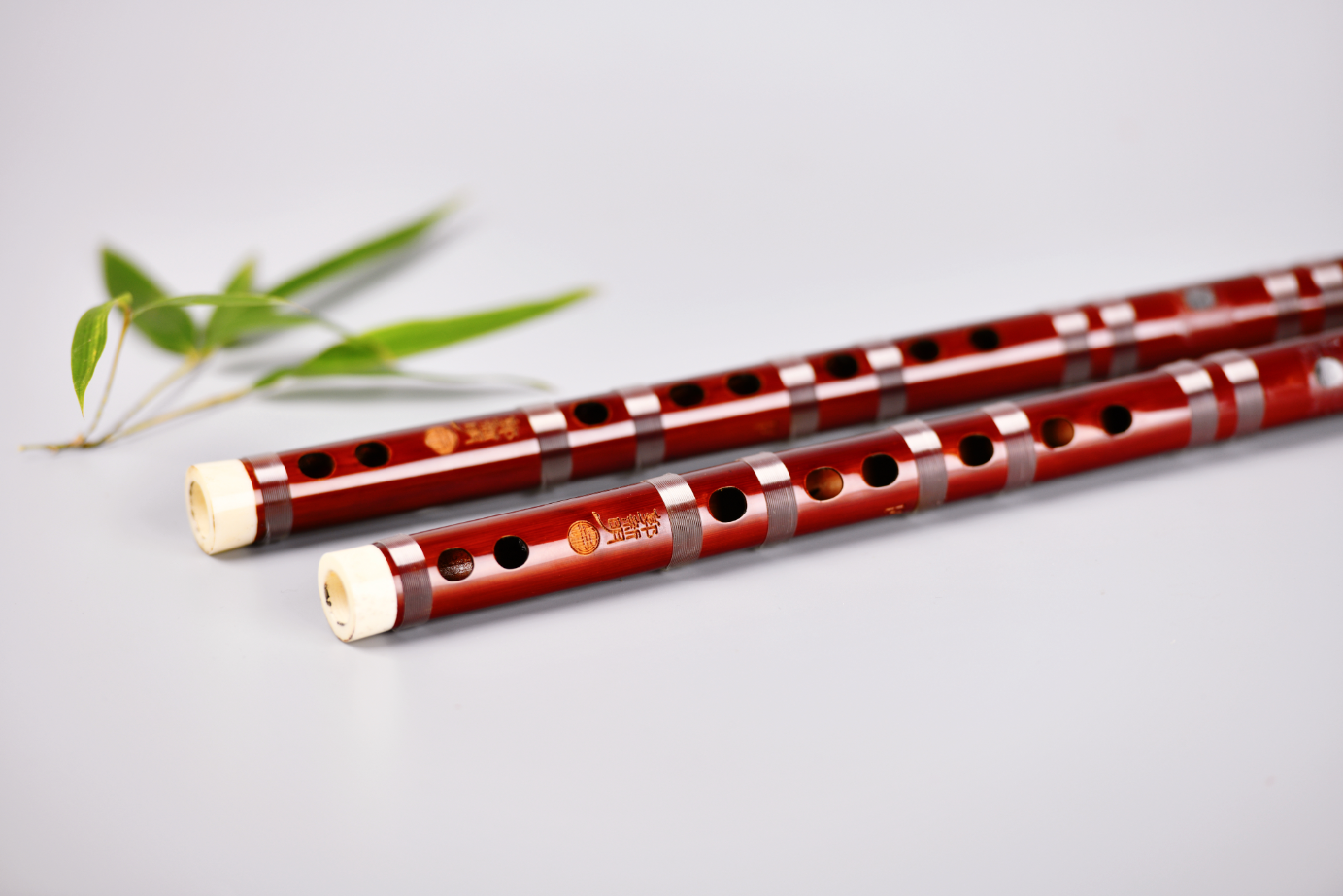
Premium Performance Model (No Joint) with Ox Bone Tips by Guo Xinming — an example of a jointless premium Dizi with a natural lacquer finish and ox bone tips. Notice the clean, consistent finish that shows the quality of the bamboo directly.
Three Questions Worth Asking First
Before choosing a Dizi, it helps to be clear on three things. These will point you to the right instrument much faster than any features list.
You don't need the most expensive Dizi — just the right one for where you are now. Most beginners do well with a D Key Dizi made from properly aged bamboo, with a tunable White Copper joint. That's really all you need to focus on.
If you're unsure, come in and we'll walk you through it. No pressure — just a quick conversation and a sound test so you can hear the difference for yourself.
Not Sure Where to Start?
Come into the shop. Our Dizi instructor or staff will do a sound test with you and give you honest advice on what fits your budget, level, and goals — no pressure, no upselling.
Browse Our Dizi CollectionHave questions first? Just drop us a message and we'll point you in the right direction.


