

Erhu Buying Guide - What You Actually Need to Know
Price, wood, snakeskin, makers - this guide covers everything in one place, in plain language. No jargon, no pressure. Just the things that actually matter when choosing your Erhu.
Buying an Erhu for the first time can feel confusing. There are many options, many price points, and it's hard to know what you're actually paying for - or what difference any of it makes to how the instrument sounds and plays.
This guide covers everything in one place. Let's keep it simple.
Three Things Drive the Price of an Erhu
Understanding these three factors will help you find the right instrument for your budget - without overpaying or getting something that holds you back.
The Wood
Different woods produce different tones, and the age and quality of the wood affects both the sound and the price.
The most common wood is Rosewood. Young Rosewood is the most affordable - lighter in colour and tone, it works well for beginners. Aged Rosewood has been seasoned over many years, giving it a darker hue and richer, more complex tone - these typically start from around S$500 and above. At the higher end, "Ming Qing" Rosewood is repurposed from furniture made during the Ming and Qing dynasties, and starts from S$2,000+.
Beyond Rosewood: Ebony and Black Sandalwood are mellow and warm - less bright, which some players prefer. Violet Sandalwood is richer and more articulate. Indian Small Leaf Sandalwood is the rarest and most prized - an Erhu made from it can cost S$5,000 or more.
Rosewood is a safe and sensible starting point. If you're drawn to a darker, mellower tone, Ebony or Black Sandalwood is worth considering. Both are valid - it comes down to the sound you prefer. For intermediate players, Aged Rosewood or Violet Sandalwood and above is worth looking at.
The Maker
There are many Erhu makers in China, each trained under different masters with varying levels of expertise. A more experienced maker will produce a better-sounding instrument from the same materials - just as a more skilled chef produces a better meal from the same ingredients. Reputable makers command a premium, and for good reason.
There are also three distinct regional tonal styles worth knowing: Suzhou (warm and sweet), Beijing (bold and bright), and Shanghai (a balance of the two). Makers from each region tend to reflect these characteristics in their instruments.
For beginners, the maker matters less at this stage - what matters most is that the Erhu plays well and sounds decent. As your ear develops, you'll start to notice and prefer specific tonal qualities. For advanced players, knowing which makers align with the tone you want is worth paying attention to.
The Most Important Component - Explained Simply
The snakeskin is widely considered the most important part of the Erhu - often called the instrument's soul. Part of the resonator is covered in python skin, which acts like a speaker cone. Python skin is used specifically because of its natural elasticity. No other material comes close, and no two pieces of snakeskin are identical - the scales are like a fingerprint.
Real Skin vs. Synthetic Skin
A synthetic skin Erhu can get close to the sound of a real snakeskin Erhu, but it will never quite match it. If you've only ever played synthetic, you may not notice what's missing - but if you compare them side by side, the difference is clear. Real snakeskin has more sweetness, more life, and more depth to the tone.
Synthetic skin does have practical advantages: it's easier to transport across borders, more resistant to climate changes, and more environmentally friendly. However, it's more prone to sagging over time, which leads to a muffled, muddy tone.
If a synthetic skin Erhu suits your situation, we carry a few options - just ask us and we'll point you to the right ones. We have models by Raoyang Beifang available in our store.
Farmed Skin vs. Wild Skin
Wild python skin is generally considered to have better elasticity - wild snakes move freely, which develops stronger, more elastic skin. This translates to better tone. However, wild snakeskin is extremely rare today, and is typically only found on very high-end instruments.
Because wild snakeskin commands a premium, some sellers may claim their Erhu uses wild python skin simply to justify a higher price. This is very difficult to verify. If a seller makes this claim, make sure you trust them completely - and that they can back it up. For beginners through to most advanced players, the origin of the skin is not something you need to worry about. What matters far more is the quality, thickness, and setup of the skin itself.
What to Look For in the Skin
The most important thing for beginners: avoid very cheap Erhus with poor-quality snakeskin. These are easy to spot - the scales look uneven or patchy, with visible peeling at the edges. The tone they produce is scratchy and harsh, and no adjustment will fix it.
Scale size - what does it tell you?
The ideal scale size is somewhere in the middle - not overly small, not overly large. Extremely large scales can produce a harsh, scratchy sound. Extremely small scales are better suited for a Gaohu (a smaller, higher-pitched instrument). There is an old saying that "the larger the scales, the better" - but this isn't always true. The best way to assess is always by sound. If you can't test the Erhu yourself and need a general rule, slightly larger scales are a safer choice, and they also tend to look better.
Skin thickness and tightness - this matters more
This is one of the most practical things to understand, especially if you're buying without being able to test the instrument first. Here's how the three types play out in practice:
These sound good from the start and need minimal break-in time. You can get a fairly accurate sense of how they'll sound right away. Good for beginners who want a better instrument without a long wait - what you hear is largely what you'll get, with natural improvement over time.
These take longer to open up. A new instrument with tight skin may initially sound thin and sharp - it needs regular, confident bowing before the tone rounds out and softens. The upside: a tighter skin holds its tone longer before deteriorating. Better suited for players with some bowing experience and strength.
Almost always found on high-end Erhus. The maker invests in a thick, quality skin and tightens it firmly - to ensure the tone stays exceptional for the longest possible time. Some of these sound great from day one; others take time to fully develop. Either way, there is always room for the tone to grow. The assumption is that if you're buying at this level, you have the bowing ability to open the sound up.
Playability and Workmanship
Playability
Playability refers to how easily the Erhu responds - how much effort it takes to produce a clean, clear tone. A responsive Erhu gives you a decent sound without much struggle. A less responsive one requires more physical effort and still produces a mediocre result.
For beginners, this matters a lot. If your instrument fights you at every practice session, it's very hard to stay motivated. A responsive Erhu means you spend your energy on learning - not on wrestling with the instrument.
For advanced players, responsiveness is about control - playing softly or powerfully, executing fast passages cleanly, changing tone colour. A thicker, tighter skin may feel less responsive when new, but will open up and develop a richer tone with regular playing.
Workmanship
This refers to how finely the instrument is physically made - the finishing, peg fit, baseplate alignment, and so on. It's honest to say that Chinese instruments still have some catching up to do in this area compared to Western instruments. Minor imperfections are not uncommon, even on reputable makers' instruments - their focus tends to be on sound rather than finish, which isn't necessarily a bad thing.
For most buyers, playability and sound matter far more than visual perfection. If the finish matters to you, inspect carefully before buying - or ask us to check it before it goes out.
Which Erhu Should You Buy?
Here's a practical breakdown by price tier - what you get, and who it's right for. All prices are in SGD and reflect our current store.
These are usually made from very poor materials and produce scratchy, harsh tones that no adjustment will fix. They can make a learner think they're the problem, when it's actually the instrument. If this is truly the only option available to you right now, it's better than nothing - but upgrade as soon as you can.
The minimum quality we'd recommend for anyone starting out. Affordable, but set up to work - you'll get a decent, playable sound and honest feedback on your progress.
- Eason Starter Rosewood Erhu by Liu Ji Feng - lightweight, responsive, sounds and plays decently. A reliable no-frills starting point.
- Eason Popular Black Rosewood Erhu by Liu Ji Feng - more responsive than the starter model, with a mellow and warm tone. A good step up within the same price range.
- Handcrafted Red Sandalwood Erhu by Award-Winning Maker Zhai Weibing - richer and more articulate than the Rosewood options. A good choice if you're drawn to a fuller tone from the start.
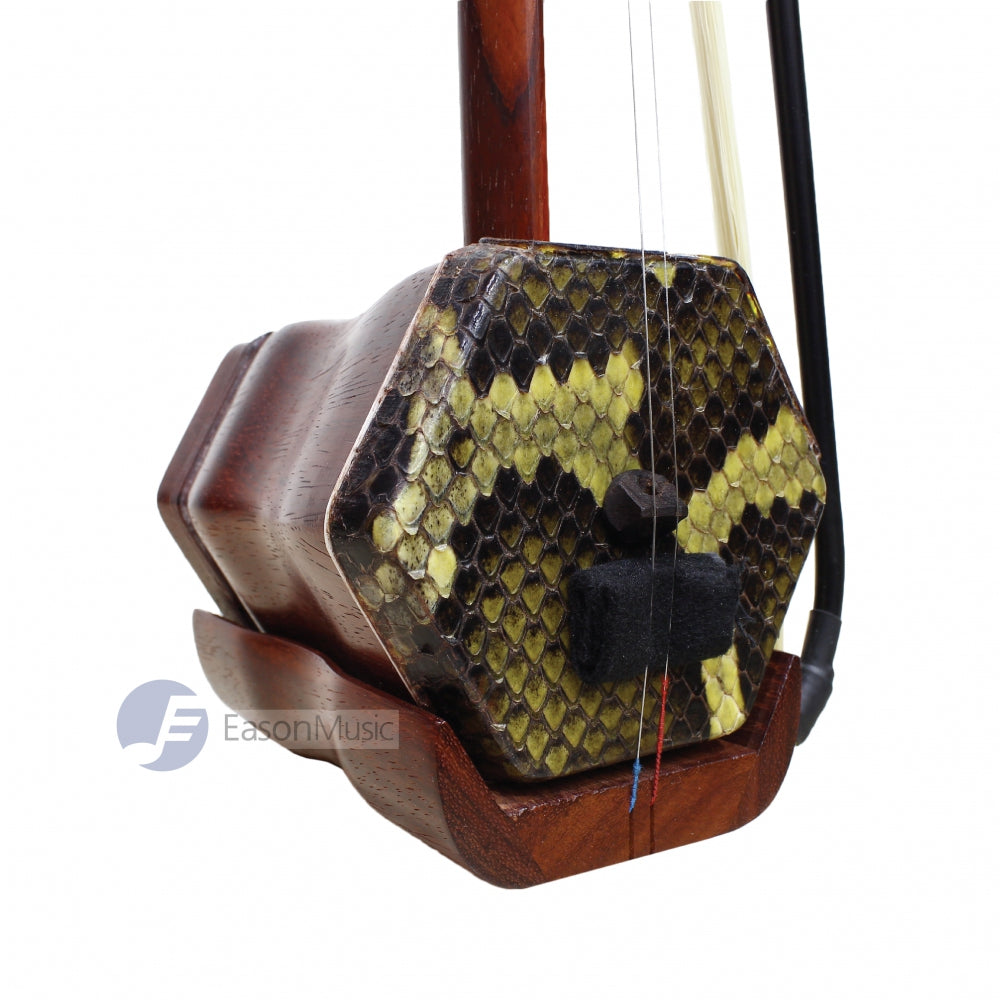
Eason Starter Rosewood Erhu by Liu Ji Feng - our recommended starting point for most beginners.
Noticeably better tone, richer articulation, and more character. Woods here include Ebony, Black Sandalwood, and Aged Rosewood. A good choice if you want to start on something that won't hold you back as you progress.
- Eason Popular Black Sandalwood Erhu by Yu Kai Ming - articulate, bright and responsive. Slightly thinner in body than higher-end models, but you'd only notice in a direct comparison.
- Second Grade Black Sandalwood Xin Harmony Erhu by Zhai Weibing - bold and warm, with the clean articulation characteristic of Black Sandalwood.
- Eason Popular Premium Black Rosewood Erhu by Liu Ji Feng - bright, articulate and sweet with a luscious tone. Very responsive. One of our better sellers in this range.
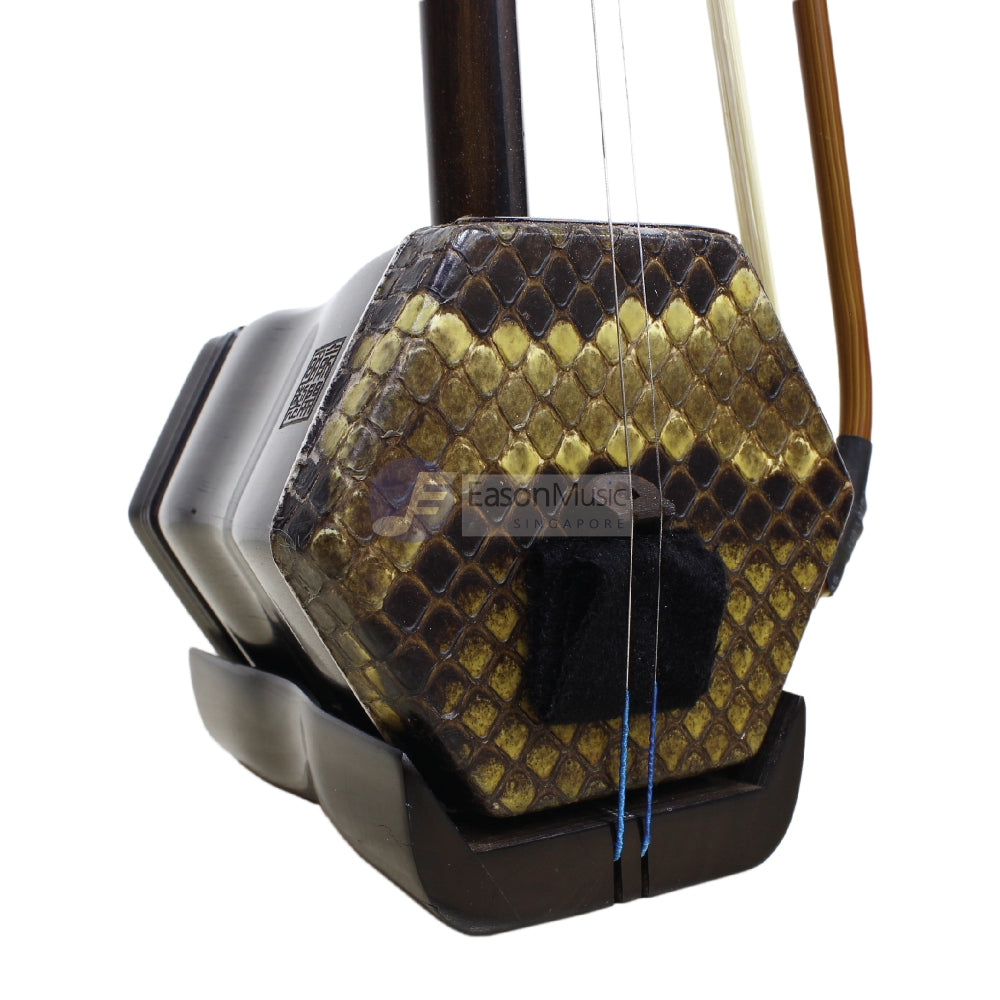
Eason Popular Black Sandalwood Erhu by Yu Kai Ming - articulate, bright and responsive. A notable step up in tone from the Tier C range.
For players who are committed - whether a beginner who has decided to pursue this seriously, or an intermediate player looking for something good enough for recordings or solo performance. Woods here are mainly Violet Sandalwood, Black Sandalwood, and Aged Rosewood - richer tone with more complexity. One of these should last you a long time.
- Shanghai Black Sandalwood Erhu by Hu Han Rou - warm, mellow, with a lush undertone. Cultured and refined in character, fitting for the meaning of her name (柔, róu - gentle).
- Professional Premium Aged Rosewood Erhu by Yu Kai Ming - sweet and resonant with a strong, robust tone. Very responsive and easy to play.
- Professional Violet Sandalwood Erhu by Yu Kai Ming - richer and more articulate, with the characteristic depth of Violet Sandalwood.
- Concert Premium Aged Rosewood Erhu by Yu Kai Ming - sweeter and more rounded than his other aged rosewood model. Deeper and stronger tone.
- Concert Premium Aged Rosewood Erhu by Hu Han Rou - sweet, articulate and luscious, with that signature warm, rounded quality.
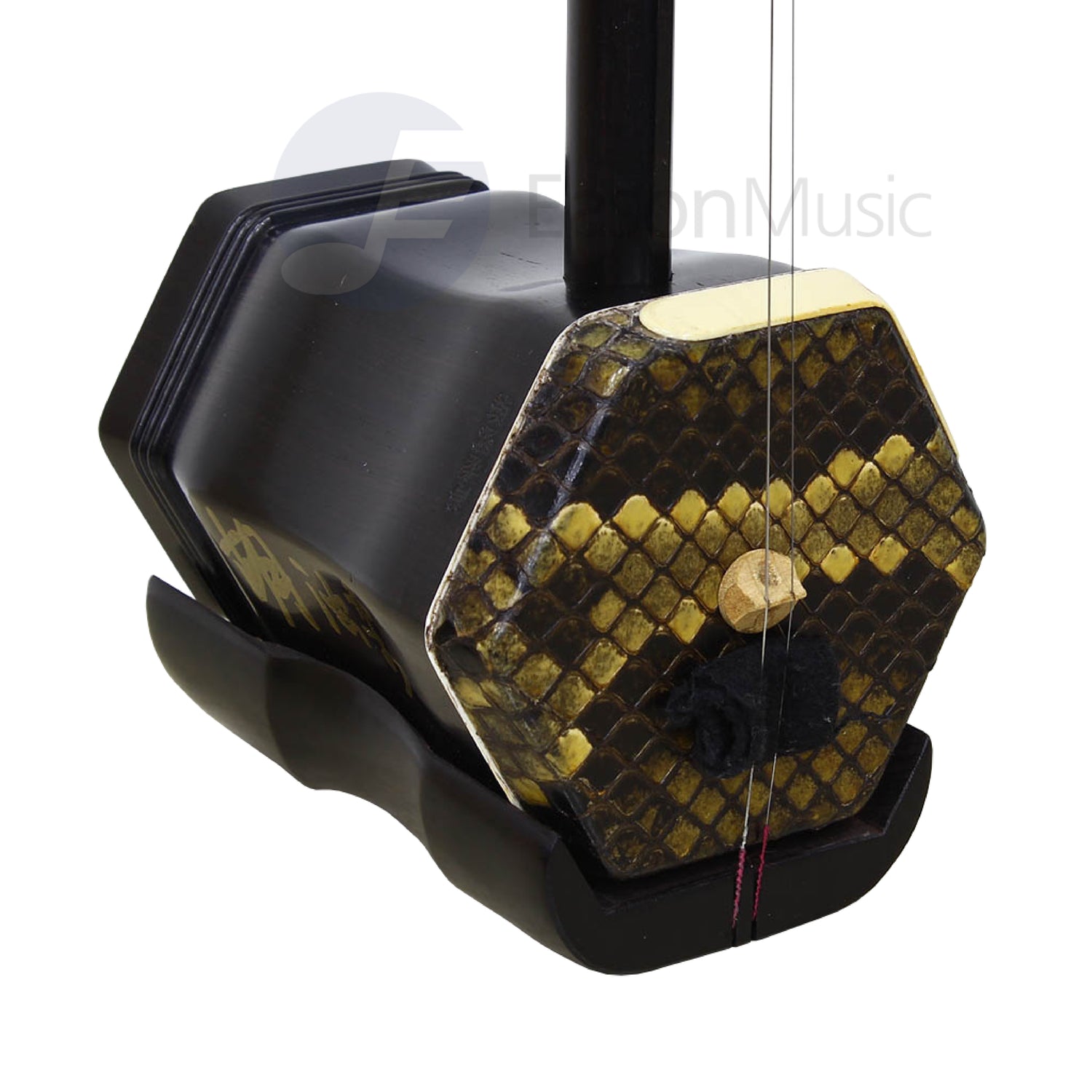
Shanghai Black Sandalwood Erhu by Hu Han Rou - warm, mellow, and lush in character. A strong choice for committed players looking for richness and depth.
A different league entirely. Louder, more articulate, richer in tone, with a higher volume threshold - you can play very powerfully without the sound breaking. Made from the best materials with thick, tight snakeskin. These need time to fully open up, but the potential they develop with regular playing is significant. Best for advanced and intermediate players looking for an instrument they won't need to upgrade again for a very long time - or players coming from Western instruments like violin or cello whose ears are already conditioned to fine instruments.
- Concert Violet Sandalwood Erhu by Hu Han Rou - sweet, rich, clean and well-rounded. Loud but not brash.
- Exquisite Ming Qing Aged Rosewood "Mountains and Rivers" Erhu by Xu Chun Feng - very clean with strong, clear high registers. Warm and sweet Suzhou tone.
- Exquisite Ming Qing Aged Rosewood Erhu by Yu Kai Ming - rich, clean and loud with a rounded yet robust tone.
- Exquisite Ming Qing Aged Rosewood Erhu by Hu Han Rou - sweet, warm and rich. Very resonant with strong projection.
- Exquisite Indian Small Leaf Violet Sandalwood Erhu by Xu Chun Feng - the most prized material. Smooth, creamy and rich, with layered, colourful overtones. Clearly a step above everything else listed here.
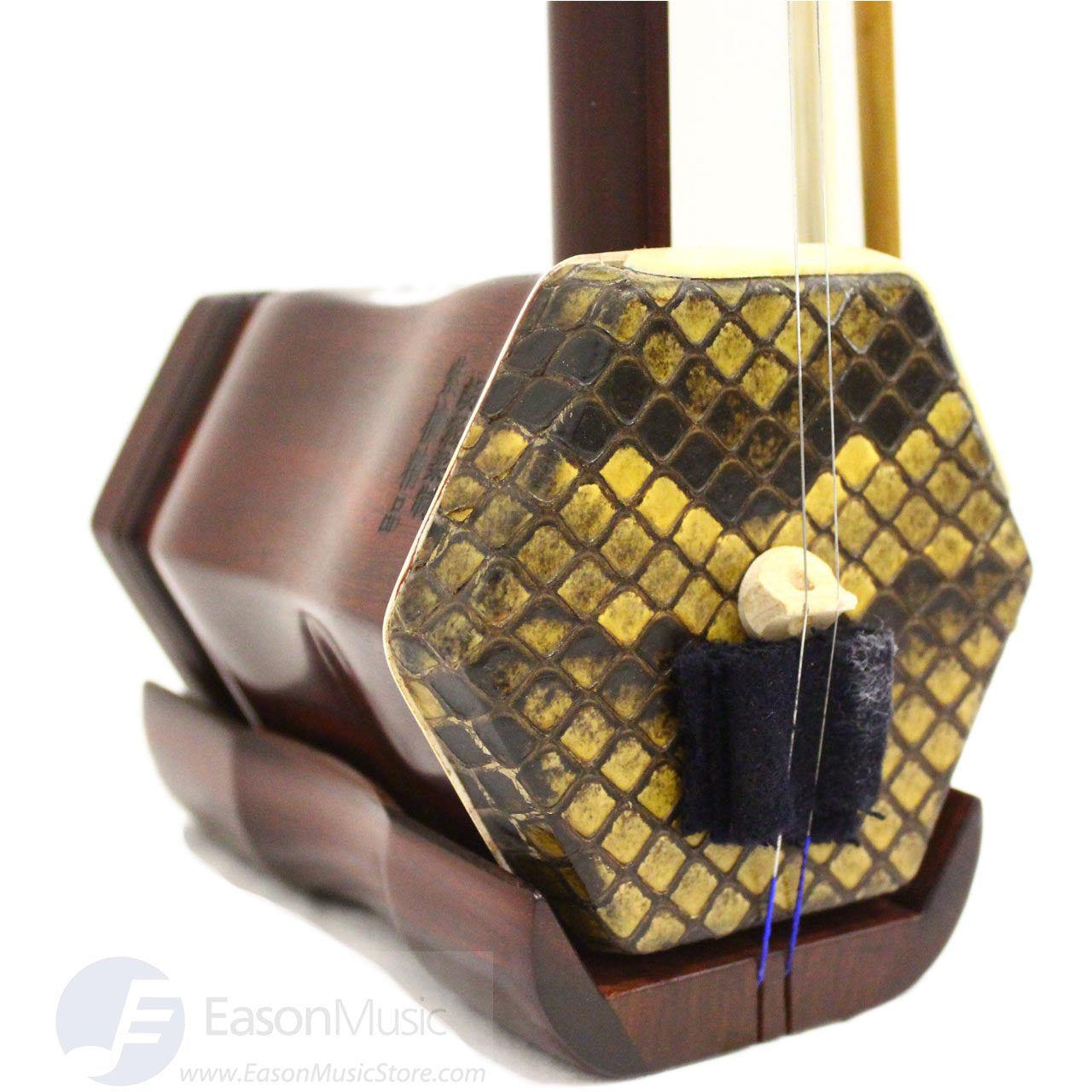
Concert Violet Sandalwood Erhu by Hu Han Rou - sweet, rich, clean and well-rounded. An example of what Tier S tone and craftsmanship looks and sounds like.
Three Questions Worth Asking First
Before choosing, be clear on these three things. They'll point you to the right instrument much faster than any features list.
You don't need the most expensive Erhu - just the right one for where you are now. Come in and we'll play a few options for you, give you our honest take, and help you decide without pressure.
Not Sure Where to Start?
Come into the shop. Our staff will play a few options for you and give honest advice on what fits your budget, level, and goals - no pressure, no upselling.
Browse Our Erhu CollectionHave questions first? Drop us a message and we'll point you in the right direction.


